
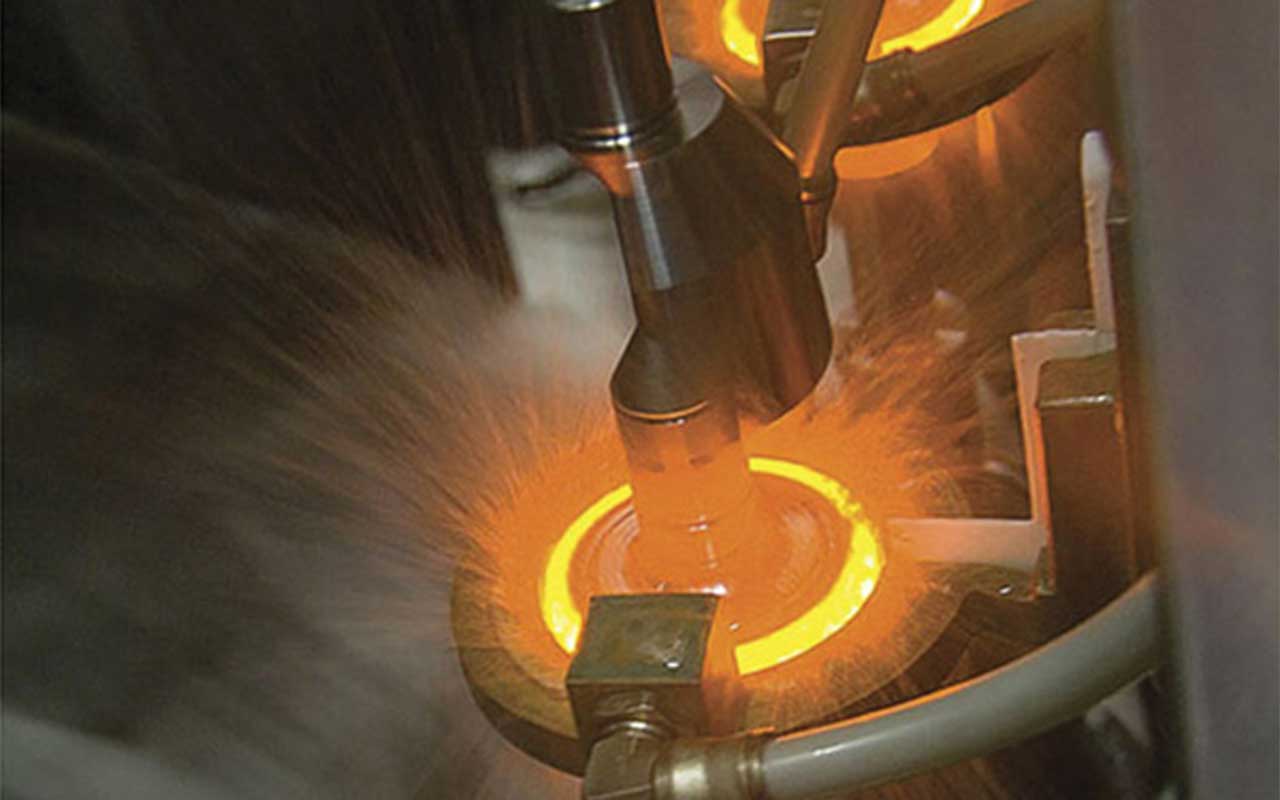
Manufacturers worldwide are ditching outdated heat treatment methods for a technology that delivers faster results, tighter quality control, and lower operating costs: induction heat treatment. Whether you’re hardening gears, annealing wires, or tempering tooling, this process transforms how conductive materials are processed—solving the age-old dilemma of balancing material hardness with structural toughness. In this comprehensive guide, we’ll break down how induction heat treatment works, its unbeatable benefits, real-world applications, and why it’s become the gold standard for modern manufacturing.
What Is Induction Heat Treatment, and How Does It Work?
Induction heat treatment is a surface heat treatment process that uses electromagnetic induction to generate heat directly within a conductive workpiece (typically steel, aluminum, or copper) without direct contact. Unlike traditional methods like furnace or salt bath heating, which waste energy heating the entire environment, induction targets heat exactly where it’s needed. The science behind it relies on two key principles: eddy currents and the skin effect:
-
Electromagnetic Field Generation: An induction coil (usually copper) connected to a high-frequency power supply (10–400 kHz) carries alternating current. This creates a rapidly oscillating electromagnetic field around the coil.
-
Eddy Current Formation: When a workpiece is placed within the magnetic field, closed electric currents—called eddy currents—are induced within the material. These currents flow against the material’s electrical resistance.
-
Skin Effect & Localized Heating: Eddy currents concentrate in the workpiece’s surface (the “skin”) rather than penetrating deeply. The higher the frequency, the thinner the heated layer (0.1–3 mm), allowing precise control over the heat-affected zone. This means you can harden a gear’s teeth while keeping its core ductile, or anneal a wire’s end without affecting its entire length.
-
Controlled Cooling (Quenching): After reaching the target temperature (typically 800–900°C for steel), the heated area is rapidly cooled (quenched) with water, oil, or air—locking in the desired material properties.
Key Difference: Traditional heating relies on conduction (heat transfer from an external source), while induction heat treatment uses joule heating (heat generated internally). This cuts heating time from hours to seconds.
Unbeatable Benefits of Induction Heat Treatment (vs. Traditional Methods)
The shift to induction heat treatment isn’t just a trend—it’s a cost-saving, quality-boosting necessity. Here’s how it outperforms furnace, salt bath, and flame heating:
1. Blistering Speed: From “Hours” to “Seconds”
Traditional furnace heating requires preheating the chamber, loading workpieces, and waiting for uniform temperature—often taking 1–3 hours for a single batch. Induction heat treatment eliminates this bottleneck: its internal heating delivers heating rates of 100–200°C per second. For example:
-
A 150mm high-speed steel milling cutter takes 2+ hours to heat in a box furnace; induction does it in 30–40 seconds.
-
A kitchen knife’s cutting edge reaches 860°C in just 4 seconds with induction heating.
One tool manufacturer reported a 12x increase in daily production capacity after switching—from 500 units/day with a furnace to 6,000 units/day with induction.
2. Precision Control: No More “One-Size-Fits-All” Hardening
The biggest flaw in traditional heat treatment is “whole-part heating,” which hardens areas that need flexibility (e.g., a motor shaft’s installation end). Induction heat treatment solves this with:
-
Custom Coils: U-shaped coils for tools, ring coils for shafts, and tooth-shaped coils for gears ensure heat only touches target zones.
-
Tight Temperature Tolerance: PLC controls and infrared thermometers keep temperatures within ±5°C, resulting in hardness variations of less than ±1 HRC across batches.
A motor shaft manufacturer saw bearing fitting pass rate jump from 85% to 99.8% after using induction to harden only the wear-resistant step, leaving the installation end soft and machinable.
3. Energy Efficiency: Cut Electricity Costs by 50%+
Furnaces waste 60–70% of energy as heat radiates from the chamber. Induction heat treatment boasts 85%+ thermal efficiency because heat is generated directly in the workpiece. No preheating, no idle energy use—you pay only to heat the parts you’re processing. A CNC tool factory calculated savings of $3,200/month in electricity by switching to induction: 0.3 kWh per tool vs. 0.8 kWh with a furnace.
4. Environmental & Safety Advantages
Induction heat treatment is a “clean” process: no open flames, no fuel combustion, and zero exhaust gases or dust. This eliminates the need for expensive emissions control systems and improvesc workshop conditions. Unlike gas furnaces that leave workers breathing fumes, induction stations stay cool—reducing burn risks and lowering ventilation costs.
5. Easy Automation: Slash Labor Costs
Traditional heat treatment requires 2+ workers per furnace to load/unload parts. Induction systems integrate seamlessly with robotic arms, conveyors, and automatic quenching units—enabling “lights-out” operation. One large tool company cut its quenching team from 8 workers to 2, reducing labor costs by 75% while boosting consistency.
Top Industrial Applications of Induction Heat Treatment
Induction heat treatment’s versatility makes it indispensable across sectors. Here are the most common use cases:
1. Automotive & Aerospace
Critical components demand reliable performance—induction delivers:
-
Gear & Shaft Hardening: Hardens gear teeth and axle surfaces to HRC 55–62 for wear resistance, while keeping cores tough to absorb impact.
-
Bearing Raceway Treatment: Ensures uniform hardness in bearing races, extending service life by 2x+.
2. Tool & Die Manufacturing
From kitchen knives to industrial punches, induction heat treatment optimizes tool performance:
-
Cutting Edge Hardening: Kitchen knife blades reach HRC 58–60 (sharp and durable) while the handle remains flexible.
-
Annealing: Softens tool steel for machining, then tempers it back to full strength—all with precise temperature control.
3. Electrical & Electronics
Delicate components need localized heat to avoid damage:
-
Wire Annealing: Softens copper wires for bending without weakening the entire length.
-
Solder Joint Heating: Targets small solder points without overheating microchips.
4. Construction & Heavy Machinery
Large parts require portable, powerful heat treatment:
-
Rebar Bending: Heats rebar locally to soften it for on-site bending, no bulky furnaces needed.
-
Hydraulic Cylinder Hardening: Strengthens cylinder walls to resist abrasion in harsh conditions.
How to Choose the Right Induction Heat Treatment System
Not all induction systems fit every application. Key factors to consider:
|
Factor
|
Small-Scale (Jewelry/Tools)
|
Medium-Scale (Automotive Parts)
|
Large-Scale (Forging/Rebar)
|
|---|---|---|---|
|
Power Output
|
1–5 kW
|
10–35 kW
|
50+ kW
|
|
Frequency
|
100–400 kHz (thin layers)
|
10–100 kHz (medium depth)
|
1–10 kHz (deep penetration)
|
|
Coil Type
|
Custom small-form coils
|
Ring/U-shaped coils
|
Large open coils
|
Induction Heat Treatment: The Future of Manufacturing Is Here
Whether you’re looking to boost efficiency, improve part quality, or cut operating costs, induction heat treatment delivers on all fronts. It’s not just a replacement for traditional methods—it’s a technological leap that transforms your production line. From 4-second knife hardening to 24/7 automated gear processing, the numbers speak for themselves: 12x faster production, 50% lower energy costs, and 99.8% pass rates.
Ready to upgrade your heat treatment process? Contact our team of induction experts today for a free consultation. We’ll help you select the perfect system for your application—whether you’re a small workshop or a large-scale manufacturer.
Have questions about induction heat treatment for your specific part? Leave a comment below, and we’ll respond with tailored advice!
