
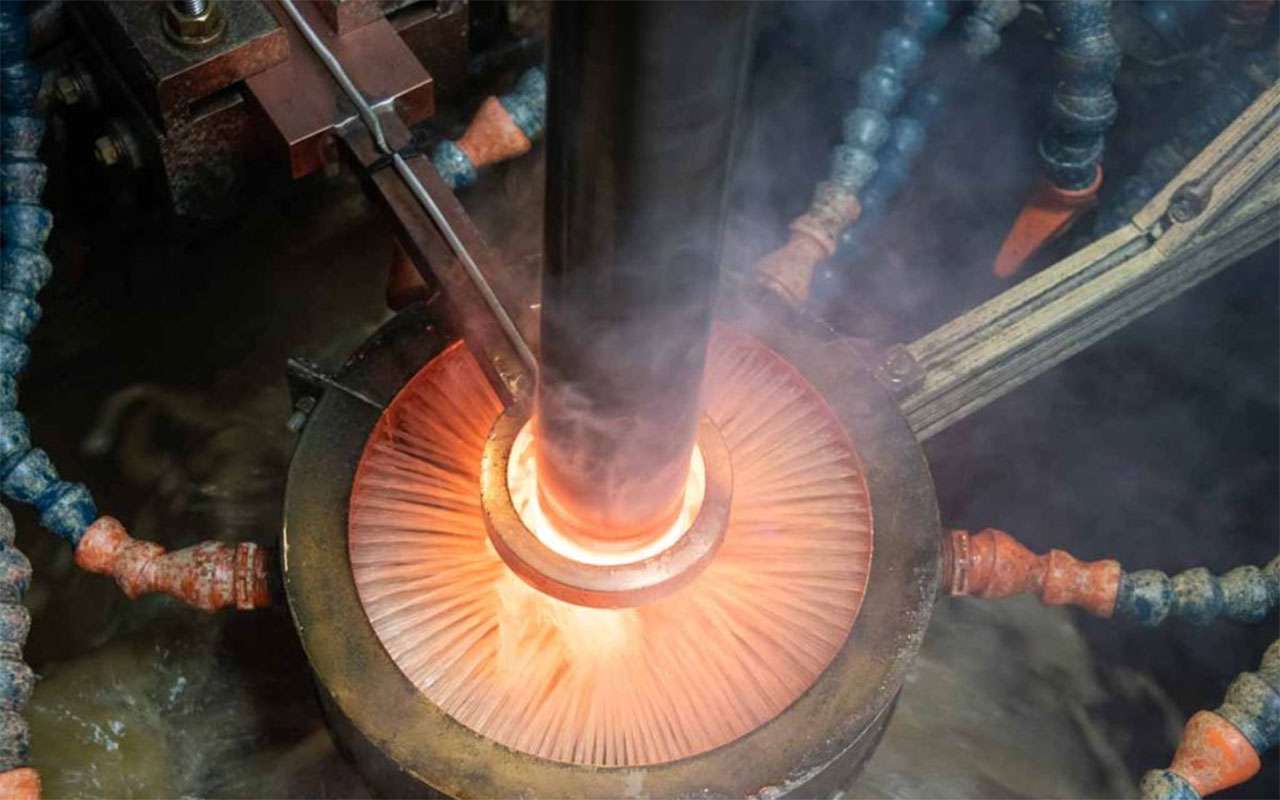
In the competitive landscape of manufacturing, automotive, and heavy machinery industries, the durability and strength of metal components are make-or-break factors. This is where the induction hardening machine emerges as a cornerstone technology. Unlike conventional hardening methods that rely on uniform heating and cooling of entire workpieces, induction hardening targets specific areas—strengthening surfaces while preserving the ductility of the core. This precision not only enhances component performance but also reduces material waste and production time. Whether you’re hardening gears, shafts, or tool bits, this guide will equip you with everything you need to select, operate, and optimize an induction hardening machine for your operations.
What Is an Induction Hardening Machine, and How Does It Deliver Targeted Strength?
An induction hardening machine is a specialized device that uses electromagnetic induction to heat the surface of conductive metals (primarily steel, alloy steel, and cast iron) to critical temperatures, followed by rapid quenching. This process creates a hardened surface layer (case) and a tough, flexible core—ideal for parts that endure friction, impact, or heavy loads. Here’s a step-by-step breakdown of its working mechanism:
-
High-Frequency Current Generation: The machine’s power supply converts standard AC electricity into high-frequency AC (ranging from 1 kHz to 300 kHz). This current flows through a custom-shaped induction coil (usually copper tubing) designed to fit the workpiece’s geometry.
-
Localized Electromagnetic Field: The alternating current in the coil generates an intense, oscillating electromagnetic field. When the workpiece is positioned within this field, eddy currents are induced only in its surface layer (the depth of penetration is controlled by frequency—higher frequencies mean shallower hardening).
-
Rapid Heating & Quenching: The eddy currents generate heat, raising the surface temperature to 850–1000°C (above the metal’s austenitizing temperature) in seconds. Immediately after heating, the workpiece is quenched (via water, oil, or polymer) to rapidly cool the surface, transforming its microstructure into martensite—a hard, wear-resistant phase. The core, which remains cool during heating, retains its original ductile properties.
This localized process is what sets induction hardening apart: it avoids overprocessing the entire part, reducing distortion and improving overall component reliability.
Key Applications of Induction Hardening Machines (Where Precision Matters Most)
The ability to harden specific areas makes induction hardening machines indispensable for parts that require a balance of strength and flexibility. Below are the top industries and use cases:
1. Automotive & Transportation
Automotive components face constant stress, making induction hardening a standard practice:
Gears & Transmission Parts: Gear teeth endure extreme friction and impact—induction hardening strengthens the tooth surface while keeping the core flexible, preventing cracking.
Crankshafts & Camshafts: The journals and lobes of these engine parts are hardened to resist wear, extending the engine’s lifespan.
Axles & Suspension Components: Induction hardening enhances load-bearing capacity, critical for safe vehicle operation.
2. Heavy Machinery & Industrial Equipment
Parts used in construction, mining, and agriculture demand exceptional durability:
Shafts & Rollers: Conveyor rollers and machine shafts are hardened to withstand constant abrasion.
Hydraulic Components: Valve stems and piston rods are hardened to resist corrosion and wear from hydraulic fluids.
3. Tool & Die Manufacturing
Cutting tools, dies, and punches rely on hard surfaces to maintain sharpness:
Drill Bits & Milling Cutters: Induction hardening strengthens the cutting edges, reducing dulling and extending tool life.
Stamping Dies: The working surfaces of dies are hardened to resist deformation during high-volume stamping.
4. Aerospace & Defense
High-tolerance components require precise hardening to meet strict safety standards:
Turbine Blades: The tips of turbine blades are hardened to resist high-temperature wear in jet engines.
Landing Gear Components: Critical load-bearing parts are induction hardened to ensure structural integrity during takeoff and landing.
How to Choose the Right Induction Hardening Machine (6 Critical Factors)
Selecting an induction hardening machine requires matching the device’s capabilities to your workpiece’s requirements. Focus on these key criteria:
1. Power Output (kW)
Power determines how quickly and uniformly the surface heats. Choose based on workpiece size and material thickness:
Small parts (e.g., tool bits, small gears): 5–15 kW machines.
Medium parts (e.g., automotive camshafts, shafts): 20–50 kW machines.
Large parts (e.g., industrial rollers, crankshafts): 60+ kW machines.
Tip: Undersized machines will cause uneven heating, while oversized ones waste energy. Always consult the manufacturer with your workpiece specs.
2. Frequency Range (kHz)
Frequency controls the depth of the hardened case—this is the most critical factor for precision:
Low Frequency (1–10 kHz): Deep case hardening (2–10 mm) for thick parts like crankshafts and axles.
Medium Frequency (10–100 kHz): Moderate case depth (0.5–2 mm) for gears, camshafts, and tooling.
High Frequency (100–300 kHz): Shallow case depth (0.1–0.5 mm) for thin parts like knife blades or small fasteners.
3. Coil Design & Customization
The induction coil must fit the workpiece’s shape to ensure uniform heating. Look for machines that offer: Interchangeable Coils: For workshops with diverse part sizes (e.g., small gears and large shafts).
Custom Coil Fabrication: For irregularly shaped parts (e.g., aerospace components or unique tooling).
4. Quenching System
Quenching speed and uniformity directly impact hardening quality. Choose a machine with a quenching system tailored to your material:
Water Quenching: For high-carbon steels (fast cooling).
Oil/Polymer Quenching: For alloy steels (slower, more controlled cooling to reduce distortion).
5. Process Control & Automation
Modern induction hardening machines offer digital controls to ensure consistency:
Programmable Logic Controllers (PLCs): Store recipes for repeated parts, reducing human error.
Temperature Sensors: Monitor surface temperature in real time to avoid overheating.
Automated Loading/Unloading: For high-volume production (reduces labor costs and improves safety).
6. Safety & Compliance
Induction hardening involves high temperatures and electricity—prioritize machines with: Overheat and short-circuit protection.Coolant leak detection (prevents coil damage and fires).Compliance with international standards (CE, UL, ISO).
Induction Hardening vs. Traditional Hardening: A Clear Advantage
Traditional methods like carburizing or flame hardening can’t match the precision and efficiency of an induction hardening machine. Here’s how they compare:
|
Feature
|
Induction Hardening Machine
|
Traditional Hardening (Carburizing/Flame)
|
|---|---|---|
|
Case Depth Precision
|
Controllable (0.1–10 mm)
|
Inconsistent (hardens entire part)
|
|
Processing Time
|
Seconds to minutes
|
Hours (carburizing requires long heating cycles)
|
|
Energy Efficiency
|
85%+ (heat targeted at surface)
|
50% or less (heat lost to surroundings)
|
|
Component Distortion
|
Minimal (localized heating)
|
High (uniform heating causes warping)
|
|
Environmental Impact
|
Low (no toxic fumes, minimal waste)
|
High (carburizing uses chemicals; flame emits fumes)
|
Real-World Example: A automotive parts manufacturer switched from flame hardening to a 30 kW induction hardening machine for gear production. They reduced processing time by 80%, cut energy costs by 50%, and reduced gear rejection rates from 12% to 2% due to improved precision.
Maintenance Tips to Maximize Your Induction Hardening Machine’s Lifespan
A well-maintained induction hardening machine can operate reliably for 15+ years. Follow these best practices:
-
Clean the Coil After Every Shift: Metal debris and scale can cause short circuits. Use a soft brush and compressed air to remove buildup—avoid abrasive materials that scratch the coil.
-
Maintain the Coolant System: The coil and power supply rely on coolant (water-glycol mixture) to prevent overheating. Check levels daily, replace coolant every 6 months, and clean the filter monthly to avoid clogs.
-
Inspect Electrical Connections: Loose or corroded connections reduce efficiency and pose fire risks. Tighten terminals monthly and replace damaged cables immediately.
-
Calibrate Temperature & Frequency Controls: Annual calibration ensures consistent hardening results. Use certified equipment to verify sensor accuracy.
-
Store Spare Coils Properly: Keep extra coils in a dry, climate-controlled area to prevent corrosion. Wrap them to avoid bending or kinking.
Is an Induction Hardening Machine a Worthwhile Investment?
Absolutely. While the upfront cost of an induction hardening machine is higher than traditional methods, the return on investment (ROI) is rapid: reduced energy costs, faster production, fewer rejected parts, and longer component lifespans all contribute to bottom-line savings. For businesses looking to improve quality, increase efficiency, and stay competitive in high-demand industries, induction hardening is not just an option—it’s a necessity.
Ready to find the right induction hardening machine for your needs? Start by: Documenting your workpiece specs (material, size, desired case depth).Prioritizing features like automation or custom coils based on your production volume.Partnering with a manufacturer that offers after-sales support (coil replacement, maintenance training).
Have questions about optimizing your induction hardening process? Leave a comment below, and our team of metallurgy experts will help you refine your approach!
